How a Naturopathic Doctor Turned Her Social Media Bio Into a Patient-Connection Funnel
A practical case study on using a social media link-in-bio page and guided quiz to help prospective patients find a clearer, more relevant next step.
A social media bio is often the first step in the patient journey
When someone discovers a naturopathic doctor on Instagram or Facebook, they may be looking for help with a specific concern, learning about services, checking whether the practice is a fit, or simply trying to understand where to begin. A single website link rarely gives each visitor enough direction.
Dr. Ibby Omole saw an opportunity to make that first step more helpful. With her permission, we are sharing her example as a case study in how a practitioner can connect social media traffic to a guided, informative experience without treating every visitor as if they have the same needs.
The idea: make the link in bio a starting point, not a link list
A traditional bio link usually sends everyone to the same homepage or presents a long list of destinations. That can work for visitors who already know exactly what they want, but it leaves uncertain visitors to do all the sorting themselves.
A guided bio funnel adds a small layer of direction. It gives visitors a clear promise, helps them identify the most relevant path, and ends with an appropriate next action such as learning more, contacting the practice, or booking a consultation.
Clear first step
Explain what the visitor can do and what kind of help the experience provides.
Short guided questions
Ask only what helps organize intent or make the next recommendation more relevant.
Helpful completion message
Give the visitor a useful summary and a clear next step instead of ending with a generic thank-you.
How the experience works from click to completion
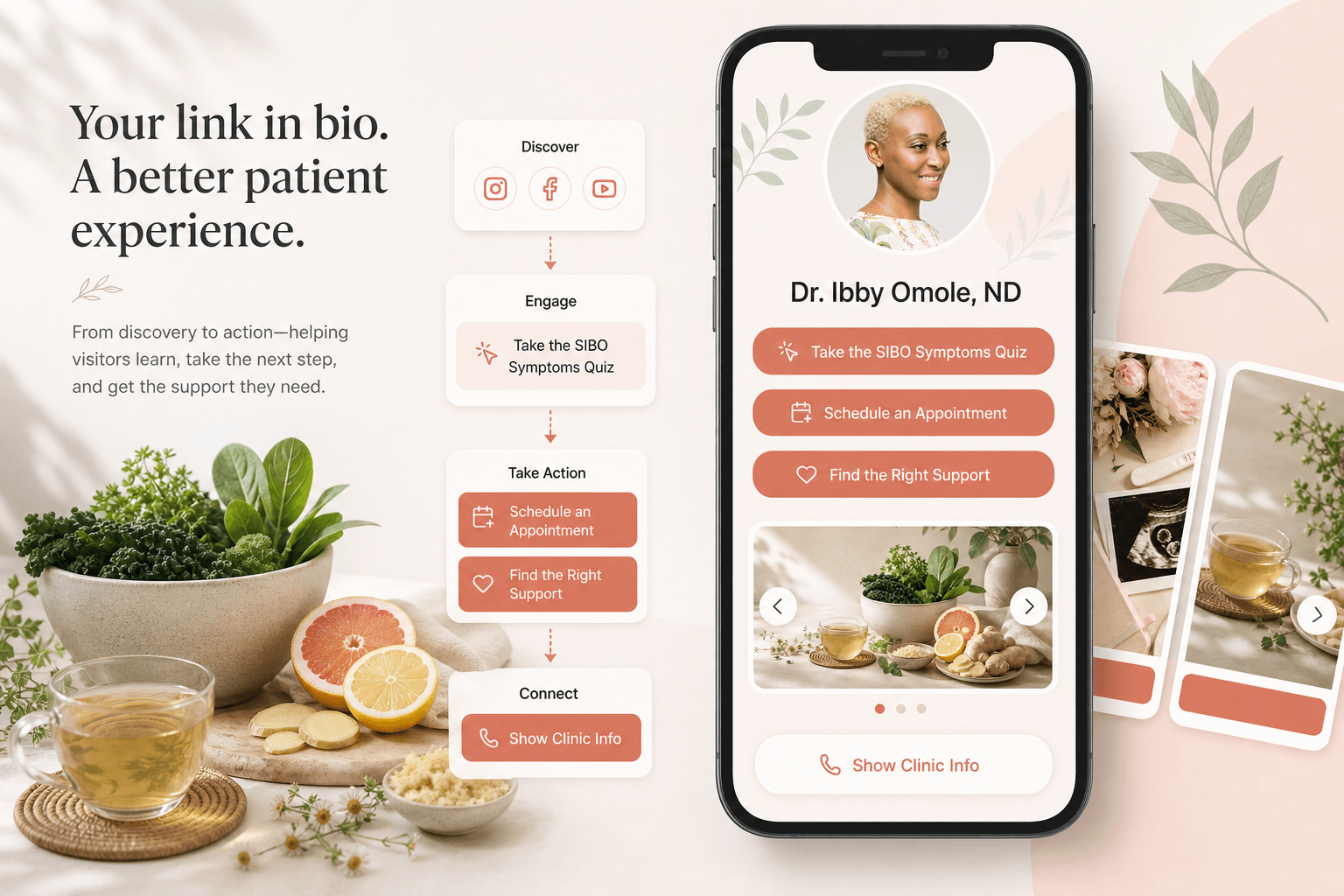
The journey begins when someone taps the link in Dr. Omole's Instagram or Facebook profile. Instead of arriving at an unfamiliar menu, the visitor is introduced to a focused entry point that explains what to expect.
The quiz then creates a brief conversation around the visitor's goals. The questions are not meant to diagnose a condition or replace professional care. Their purpose is to help the visitor reflect on what they are looking for and help the practice guide the next interaction with better context.
At completion, the experience continues the conversation. The message can acknowledge the visitor's answers, reinforce what happens next, and direct them to the most relevant resource, contact option, or booking action. That final moment matters because it turns participation into progress.
Why this approach can help practitioners serve people better
For a practitioner, the value is not simply collecting another lead. A guided flow can reduce vague inquiries, reveal what a visitor is trying to accomplish, and make the first follow-up more relevant. It also gives people a lower-pressure way to begin learning about the practice before they are ready to book.
For visitors, the experience can make a complex decision feel easier. They do not need to navigate every service page or guess which button applies to them. They receive a clearer starting point while retaining control over whether and when to contact the practice.
The same model works beyond naturopathic medicine
The pattern is useful anywhere a social media audience has different goals and needs help choosing a next step. Functional-medicine practices, nutritionists, therapists, chiropractors, wellness clinics, coaches, and other appointment-based professionals can adapt the same structure.
Start with visitor intent
Identify the few reasons people actually visit your profile, such as learning about services, preparing for a consultation, or asking whether you can help.
Keep direct options visible
Let ready visitors contact you or book directly; make guidance available without forcing everyone through a quiz.
Use conditional questions
Ask follow-up questions only when an answer changes the information, route, or preparation needed.
Make the final action specific
Connect each outcome to one useful next step rather than sending every visitor to the same generic page.
A practitioner checklist for building the funnel
Begin with one focused version and improve it after real visitors use it. The strongest funnels are usually the ones that stay simple enough to maintain and specific enough to be useful.
State the promise
Tell visitors what they will learn, receive, or be able to do after starting.
Choose three to five paths
Group your most common visitor goals instead of listing every service you offer.
Protect privacy and trust
Collect only necessary information, explain how it will be used, and avoid presenting the quiz as diagnosis or medical advice.
Test the full journey
Open the link from a phone, complete every path, check every CTA, and confirm the completion message matches the promised experience.
Measure meaningful progress
Review path selection, completion, contact actions, and lead quality—not clicks alone.
A better bio link begins with a better first conversation
Dr. Omole's example shows how a practitioner can use a familiar social media touchpoint to create a more thoughtful beginning. The link in bio becomes a guided doorway: simple enough for a first-time visitor, useful enough to create context, and connected to a real next step.
For practices that want to turn social traffic into more meaningful conversations, that is the opportunity. The goal is not to add friction or automate care. It is to help the right person find the right place to begin.
Build your practitioner funnel
Give every social media visitor a clearer place to begin.
Create a guided link-in-bio experience that organizes intent, captures useful context, and routes visitors to the right next step.
Explore bio funnel builderFAQ
What is a social media link-in-bio funnel?
It is a mobile-friendly page connected to a social profile that helps visitors choose a relevant path, answer a few useful questions, and continue to a specific next action such as learning more, contacting the practice, or booking.
Can a practitioner quiz diagnose a patient?
It should not. A marketing or intake quiz can organize visitor intent and support a better first conversation, but it should not be presented as diagnosis, treatment, or a substitute for professional medical advice.
What should a naturopathic doctor's bio link include?
Include a clear welcome message, direct contact or booking options, key services or visitor paths, trust-building information, and optional guided questions that help visitors decide where to begin.
How many questions should the funnel ask?
Start with only the questions that change routing, preparation, follow-up, or the recommended next step. A short focused flow is usually easier for visitors to complete and easier for a practice to improve.