Quiz vs form: when to switch from a static form to a guided flow
Use this decision guide to decide when a form is enough and when an interactive quiz can improve lead qualification, personalization, routing, and completion CTAs.
The short answer: forms collect, quizzes guide
A static form is useful when the visitor already knows what they need and your team only needs a clean record. A quiz or guided flow is useful when the visitor needs help choosing, qualifying, explaining context, or reaching the right next step.
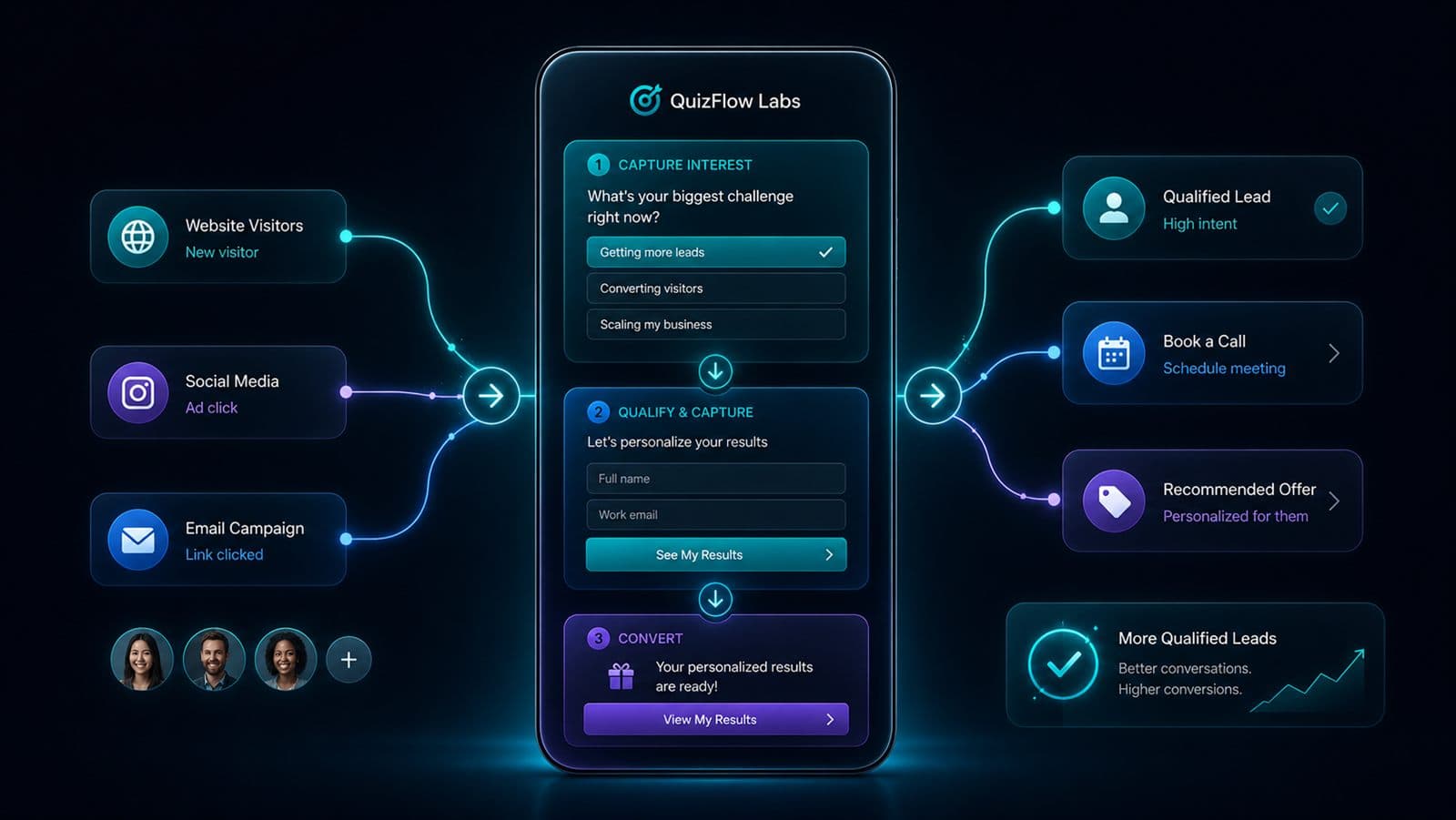
The difference is not just visual. A form treats every submission the same. A quiz can adapt based on answers, segment the visitor, personalize the result, and route the next action. That makes the quiz-vs-form decision important for lead generation, client intake, product recommendations, quote requests, and contact form alternatives.
If your current form produces vague messages, low-fit leads, or too much manual sorting, it may be time to replace it with an interactive decision flow.
Forms are best for known transactions
A form works well when the visitor already knows exactly what they need and your team only needs a clean record. Contact forms, support tickets, and checkout-style workflows can stay simple.
The friction starts when the visitor needs help deciding, comparing options, or explaining a situation that does not fit a flat list of fields.
Use a form for simple capture
Newsletter signups, account updates, event registrations, and basic contact requests often do not need branching logic.
Use a form when the path is obvious
If every visitor should answer the same fields and receive the same next step, a static form may be enough.
Use a form when speed matters more than context
For very low-friction interactions, fewer fields can be better than a guided experience.
Quizzes are best for guided qualification
A quiz flow earns its keep when answers should influence what happens next. It can adapt the path, qualify the lead, recommend a product or service, and prepare the completion message around what the visitor already shared.
That makes quiz funnels especially useful for consultative services, product recommendations, applications, intake, and social-first funnels.
Use a quiz when answers should change the path
If a budget, goal, timeline, location, or service interest changes the follow-up, the experience should adapt.
Use a quiz when visitors need help choosing
Guided questions can turn confusion into a recommendation, service match, quote path, or booking step.
Use a quiz when completion should be personalized
A quiz result page can reflect the visitor's answers and offer a next step that fits their intent.
Use a quiz when your team needs context before follow-up
Tags, scores, file uploads, and routing answers can reduce the manual sorting that happens after a generic form submission.
Signs your form should become a guided flow
Most teams do not switch from forms to quizzes because forms are broken. They switch because the form is no longer doing enough work. The visitor needs more guidance, and the team needs cleaner context before follow-up.
If you recognize several of these patterns, a quiz or interactive inquiry flow will likely create more value than another form redesign.
Your message field is doing too much work
If people write long, inconsistent messages, structured questions can collect the same context in a cleaner way.
Your team asks the same follow-up questions
Repeated follow-up is a sign the form is not collecting goal, scope, timeline, budget, or fit signals early enough.
Different inquiries need different next steps
Pricing requests, support questions, booking intent, and partnerships should not all land on the same generic path.
Visitors are unsure what to choose
If the visitor needs a recommendation, comparison, or service match, a guided flow will feel more helpful.
You care about lead quality, not just lead volume
Quizzes can qualify intent and surface better-fit leads before your team spends time reviewing them.
Quiz vs form examples by workflow
The best choice depends on the job the page needs to do. A form is fine when the visitor is submitting known information. A quiz is better when the experience should interpret answers and recommend a next step.
Contact form alternative
Use a guided flow when visitors may want pricing, booking, support, partnerships, or general questions. Route each inquiry instead of sending everything to one inbox.
Lead generation quiz
Use a quiz when you need to qualify intent, capture contact details, and send high-fit visitors to a booking or quote path.
Client intake flow
Use a quiz when scope, timeline, files, budget, or eligibility should be collected before the first conversation.
Product recommendation quiz
Use a quiz when preferences, needs, constraints, or experience level should shape the recommended product or package.
Survey or feedback form
Use a form or survey when the main goal is research and every respondent should answer the same questions.
What changes when you replace a contact form
A contact form alternative is one of the clearest places to see the difference between a form and a guided flow. Instead of asking for name, email, and a blank message, the flow starts by asking what the visitor is trying to do.
That first intent question can branch into different paths for pricing, booking, support, partnership, quote requests, or general inquiries. The visitor gets a more relevant experience, and your team receives cleaner context.
If you want to see this pattern in action, the contact form alternatives page includes a live demo of a guided inquiry flow.
Intent comes first
The visitor chooses why they are reaching out before being asked for contact details.
Questions adapt
A pricing request can ask different follow-up questions than a support or partnership inquiry.
Completion routes the next step
The final screen can send each visitor to booking, a quote path, a resource, or a more relevant follow-up.
Decision checklist: keep the form or switch to a quiz?
Use this checklist when deciding whether to keep a static form or build a guided quiz funnel. The more times you answer yes, the stronger the case for switching.
Do answers change the best next step?
If yes, a guided flow can use branching and completion CTAs instead of treating everyone the same.
Do you need to qualify fit before follow-up?
If yes, collect intent, urgency, budget, scope, or eligibility before the handoff.
Do visitors need help choosing?
If yes, a quiz can recommend a product, package, service, or path based on answers.
Does your team manually sort submissions?
If yes, tags, scores, and routing questions can make the submission more useful before anyone reads it.
Is the completion moment valuable?
If yes, do not waste it with a generic thank-you page. Use a personalized result or next-step CTA.
Would fewer but better leads be more useful?
If yes, a quiz may be better than a low-context form that maximizes submissions but creates more triage.
Mistakes to avoid when switching from forms to quizzes
A quiz is not automatically better than a form. It works when the questions are purposeful and the result uses the answers. If the quiz is just a longer form with more clicks, it will add friction without adding value.
Do not ask questions you will not use
Every question should support qualification, routing, personalization, or follow-up.
Do not delay contact capture forever
The flow still needs a clear lead capture moment when the visitor has enough reason to continue.
Do not route everyone to the same ending
If the quiz collects different answers, the completion screen should reflect those differences.
Do not overbuild the first version
Start with the key branches and outcomes. Add complexity after you see how real visitors respond.
The practical rule
Keep the form when the visitor knows what they need, every submission follows the same path, and speed matters more than context.
Switch to a quiz or guided flow when answers should change the questions, result, routing, or follow-up. That is where QuizFlow Labs is strongest: turning visitor intent into a clearer next step for both the visitor and your team.
See the pattern
Try the live contact form alternative demo.
See how a guided inquiry flow can replace a static contact form by identifying intent, asking relevant follow-up questions, and routing the next step.
View contact form alternativesFAQ
Is a quiz better than a form for lead generation?
A quiz is often better when you need to qualify intent, personalize the result, or route leads. A form is better when you only need simple contact details or a fixed set of fields.
When should I replace a contact form with a guided flow?
Replace a contact form when different inquiries need different questions, outcomes, or follow-up paths. Pricing, booking, support, quote, and partnership inquiries are good examples.
Will a quiz add too much friction?
A quiz adds friction if it asks unnecessary questions. It reduces friction when it helps visitors choose the right path and avoids irrelevant fields.
Can a quiz still collect contact details?
Yes. A quiz can include lead capture for name, email, phone, and other fields, but it can place that capture after the visitor has shared enough context.
What is the biggest advantage of a quiz over a form?
The biggest advantage is adaptive routing. A quiz can use answers to change the path, segment the visitor, personalize the completion screen, and send the lead to the right next step.