12 client intake questions that reduce back-and-forth
Use these client intake questions to collect goals, scope, timeline, budget, files, and decision-maker context before the first call, so your team can reduce follow-up and route new inquiries faster.
Why client intake creates so much back-and-forth
Most client intake forms collect contact details first and context later. That gives your team a name, email, and vague message, but it rarely explains what the client needs, how urgent the request is, who should respond, or whether the inquiry is a fit.
A stronger client intake questionnaire does the opposite. It helps the client clarify their situation while giving your team the details needed to prepare a useful first reply. The best intake questions reduce follow-up because they collect decision-making context before the handoff happens.
This is especially useful for agencies, clinics, consultants, coaches, studios, and service businesses where fit, timeline, scope, and constraints matter before the first call.
What a good client intake question should do
Every question in a client intake flow should earn its place. If the answer will not change the response, routing, recommendation, or preparation work, it probably belongs later.
A useful intake question usually does one of four jobs: it qualifies fit, clarifies the desired outcome, uncovers constraints, or tells your team what should happen next. That is why a guided intake quiz can outperform a static form when the request needs interpretation.
Qualify fit
Identify whether the client matches your service area, budget, timeline, or eligibility criteria.
Clarify intent
Understand what the client is trying to solve before asking them to book or wait for a reply.
Prepare the handoff
Collect files, examples, stakeholders, and context your team needs before the first conversation.
Route the next step
Send different client types to the right booking path, resource, team member, or completion message.
12 client intake questions to ask before the first call
Use these client intake questions as a starting point. You do not need all of them in every flow. Choose the questions that help your team reduce repetitive follow-up and give the client a clearer next step.
1. What outcome are you trying to achieve?
This shifts the conversation from a generic request to a clear goal. It also helps you tailor the completion screen around the result the client wants.
2. What is the main problem you want help solving?
This gives your team the client intake context that usually gets buried in an open-ended message field.
3. What have you already tried?
This prevents repeat advice and helps your team understand whether the client needs strategy, execution, troubleshooting, or a fresh start.
4. Which service or package are you most interested in?
This helps route the inquiry to the right offer, intake path, or specialist before anyone manually reviews it.
5. What is your ideal timeline?
Timeline is one of the fastest ways to separate urgent requests, future planning, and poor-fit inquiries.
6. What budget range should we plan around?
A budget question reduces awkward follow-up and lets you route clients to the right service level, resource, or alternative next step.
7. Who else is involved in the decision?
This is useful for agencies, consultants, and clinics where a spouse, partner, stakeholder, or internal team may affect the next step.
8. What files, links, or examples should we review?
Collecting assets early can save an entire email exchange. Use file upload or link fields when examples, reports, photos, documents, or screenshots matter.
9. What would make this project or appointment successful?
This gives you a success signal that can shape recommendations, call prep, and follow-up messaging.
10. What is the biggest constraint right now?
Constraints reveal whether the barrier is budget, timing, capacity, confidence, compliance, or missing information.
11. How urgent is this request?
Urgency can trigger different routing, response expectations, or completion copy. It also helps your team avoid treating every inquiry the same.
12. What is the best next step if we are a fit?
This lets the client tell you whether they want a call, quote, recommendation, email reply, or resource before the flow ends.
Questions to route different client types
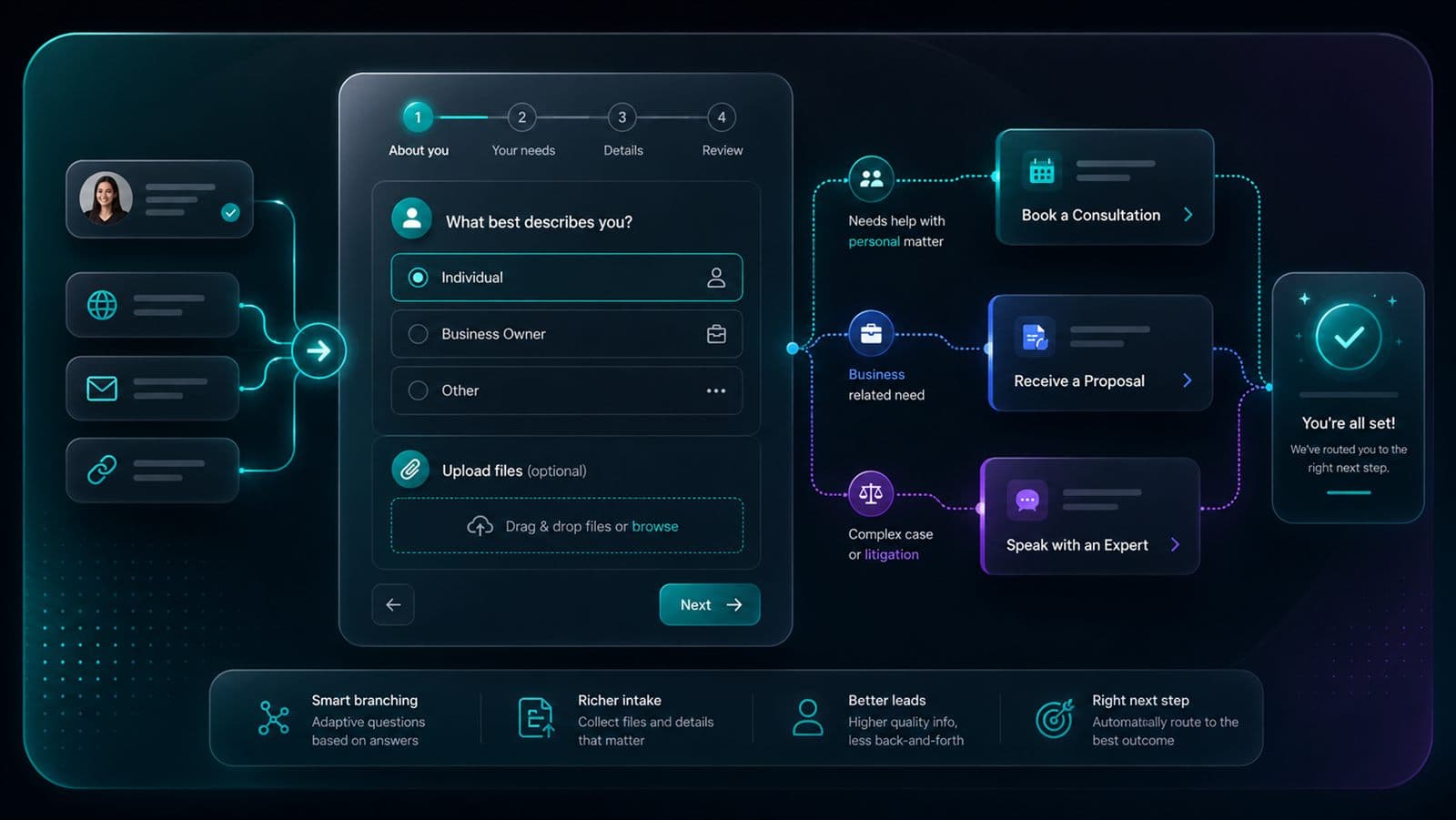
The biggest advantage of a guided intake flow is that answers can change what happens next. Instead of sending every inquiry into the same inbox, you can use branching logic and response tags to separate high-intent leads, support requests, low-fit inquiries, and people who need education first.
For an agency, a budget and timeline answer might route someone to a paid discovery call or a lower-touch resource. For a clinic, a symptom or goal answer might route someone to the right service category. For a consultant, a company size or decision-maker answer might determine whether the lead is sales-ready.
Agency intake
Ask about goal, budget, timeline, existing assets, approval process, and launch date.
Clinic intake
Ask about concern, desired outcome, timing, previous treatments, eligibility, and preferred appointment type.
Consultant intake
Ask about business stage, team size, current bottleneck, decision process, urgency, and expected outcome.
Service business intake
Ask about location, scope, timeline, photos or files, constraints, and preferred contact method.
How to turn intake answers into a guided flow
A static client intake form stores answers. A guided intake quiz can use those answers immediately. That means the same intake experience can collect context, qualify the inquiry, and send the client to a next step that matches what they told you.
In QuizFlow Labs, you can use branching logic to change the path, response tags to segment answers, file upload for supporting context, lead capture for contact details, and completion CTAs to send people to a booking page, resource, or follow-up path.
Start with the client goal
Ask what they want help with before asking for name and email. This makes the experience feel more useful from the first step.
Capture contact details after value is clear
Place lead capture after the client has shared enough context to understand why the next step matters.
Tag answers that affect follow-up
Use tags for intent, urgency, service interest, budget fit, and routing category.
Personalize the completion screen
Reflect the client's answers and give one clear action instead of ending with a generic thank-you page.
Example client intake quiz structure
A simple client intake flow does not need to be long. The goal is to collect the right context in the right order, then route the client with less manual interpretation.
Step 1: Choose the main goal
Let the client select the outcome or service area that best matches their request.
Step 2: Clarify the situation
Ask one or two questions about the problem, current state, or what they have already tried.
Step 3: Collect constraints
Ask about timeline, budget, urgency, location, or eligibility only when those answers affect the next step.
Step 4: Request files or examples
Use file upload when screenshots, documents, photos, or reference links will help your team prepare.
Step 5: Capture contact details
Ask for name, email, phone, or preferred contact method after the flow has created enough context.
Step 6: Show the next best action
Route the client to a booking link, quote request, resource, or follow-up message based on their answers.
Start with a better intake experience
The best client intake questions reduce back-and-forth because they are tied to action. They help the client explain what matters, help your team prepare, and make the next step clearer before anyone sends another email.
If your current client intake form creates vague inquiries or repeated follow-up, rebuild it as a guided flow. Start with the questions that affect routing and preparation, then add contact capture and a completion CTA once the client has shared useful context.
Build the flow
Create a guided client intake quiz instead of another static form.
Use QuizFlow Labs to collect context, qualify fit, capture files, and route each client to the right next step.
Explore client intake quizzesFAQ
What should a client intake form include?
A client intake form should include the client's goal, main problem, timeline, budget or fit criteria, decision-maker context, supporting files or links, contact details, and preferred next step.
How many client intake questions should I ask?
Ask only the questions that change your follow-up, routing, preparation, or recommendation. Many service businesses can start with six to ten strong questions, then add conditional questions only when an answer requires more context.
Should I ask for contact details first?
Usually no. For consultative services, it is often better to ask one or two context questions first so the client feels understood before you request name, email, or phone number.
How do I reduce back-and-forth with new clients?
Collect goal, scope, timeline, budget, urgency, files, and decision-maker context before the first reply. Then route the client to a specific next step instead of sending every inquiry into the same generic follow-up process.