01
Start with context
Identify the person, service, need, urgency, and goal before asking for deeper details.
Client intake quiz builder
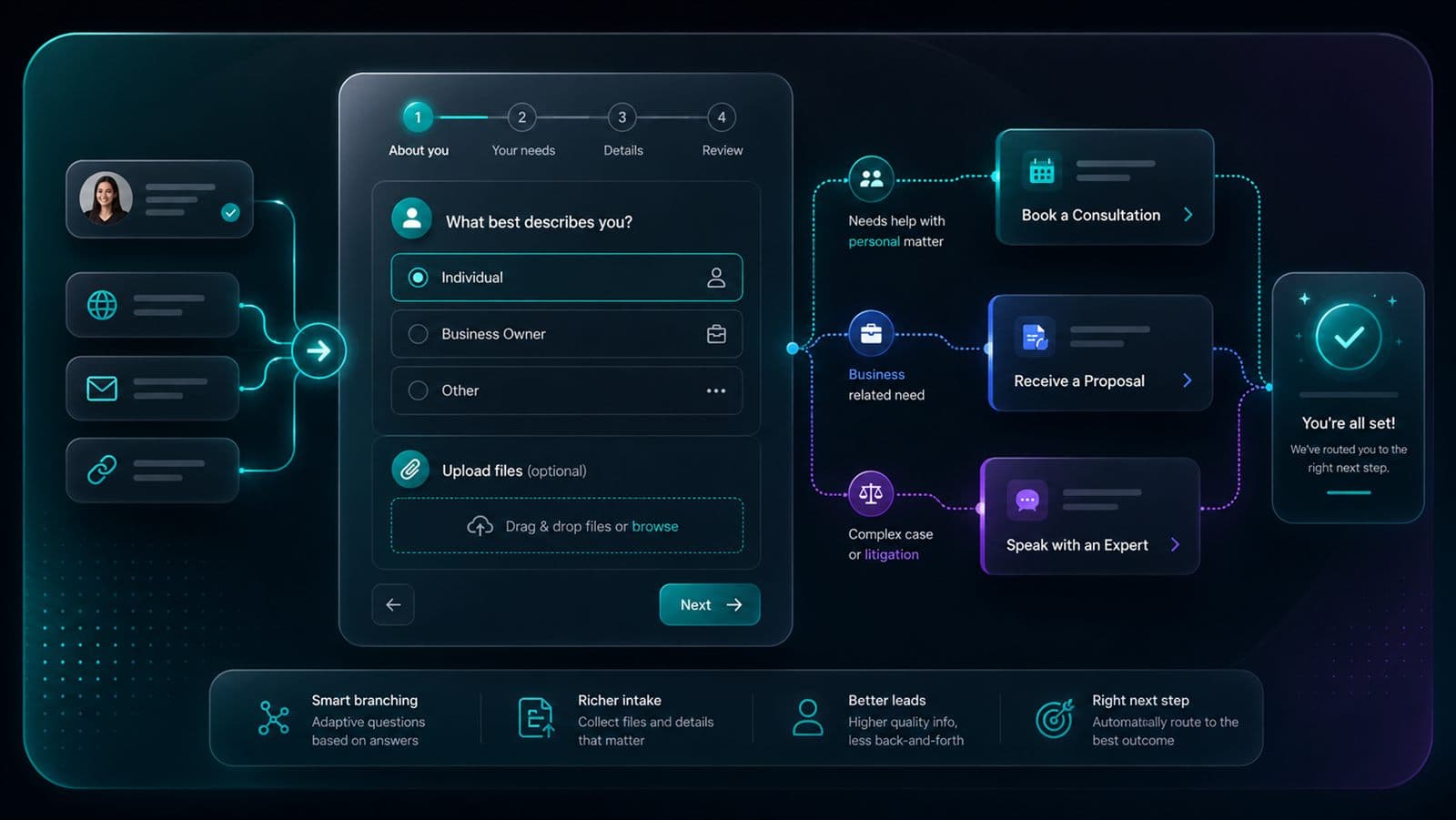
Replace static intake forms with a guided experience that gathers richer context, asks relevant follow-ups, and prepares everyone for a better next step.
Less repetition
Stop asking questions the client already answered.
Better preparation
Begin the next conversation with useful context.
Clearer ownership
Route every submission toward the right person or action.
From blank form to useful brief
A thoughtful intake experience respects the client’s time while giving your team the detail needed to respond well.
Identify the person, service, need, urgency, and goal before asking for deeper details.
Use branching so each client sees the questions that matter to their situation—and skips the rest.
Gather structured responses, contact details, files, screenshots, briefs, or supporting records.
Route the completed intake toward booking, review, proposal, follow-up, or another useful next step.
A smarter first touch
Guide clients one decision at a time. Use structured blocks, visual choices, conditional paths, and focused prompts to create an experience that is easier to complete and easier to act on.
Explore question blocks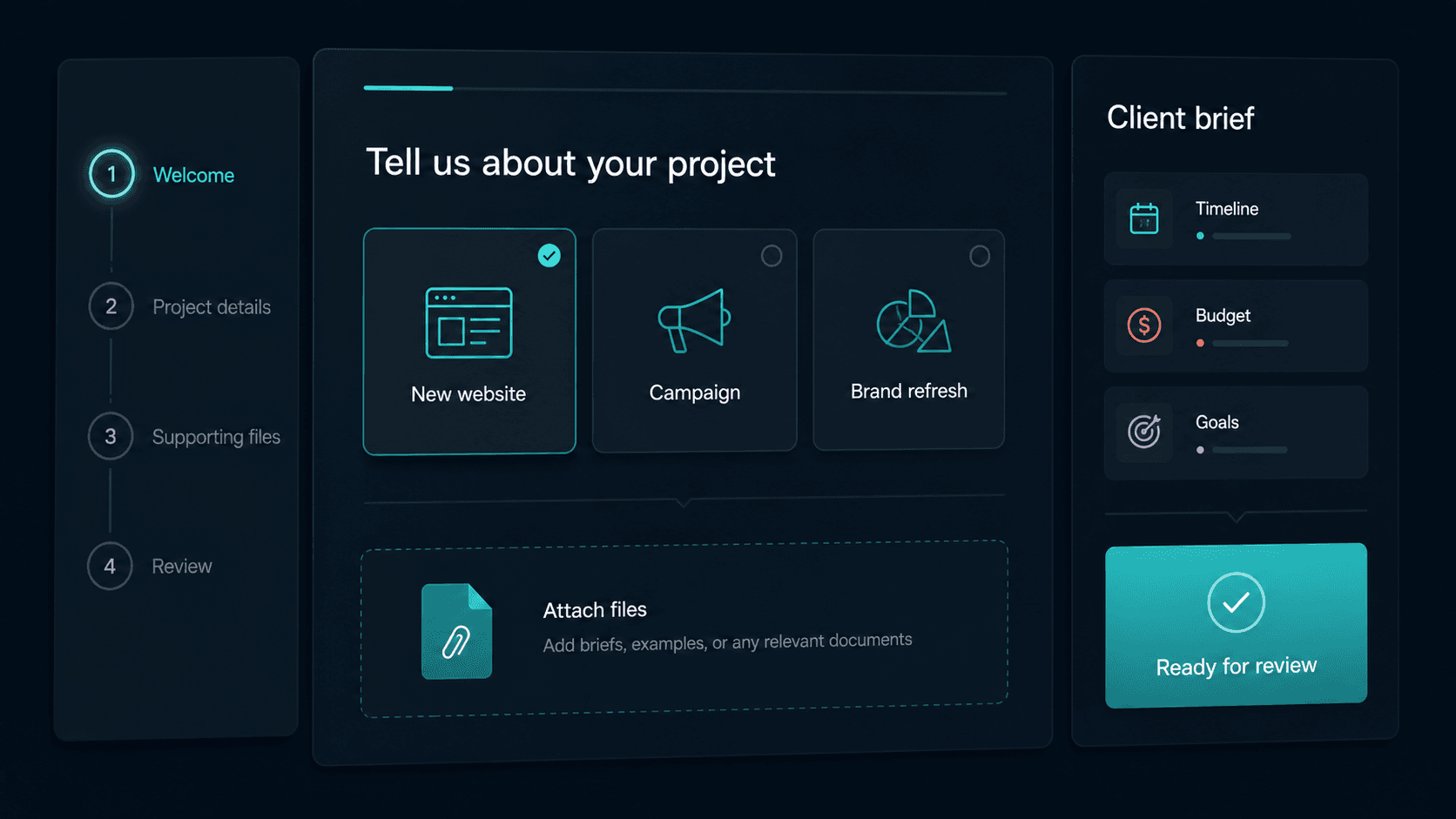
Scattered email threads and incomplete context.
A relevant path shaped by each response.
A clean record and a clear next action.
Designed for service
The details change by industry. The goal stays the same: make it easier for the client to explain what they need and easier for your team to respond.
Collect scope, goals, timing, budget, stakeholders, and attachments before discovery.
Prepare for estimates, consultations, applications, and quote requests with better context.
Guide people toward the appropriate consultation path based on needs and relevant context.
Pre-screen applicants, members, partners, or prospects before manual review begins.
Product proof
Collect documents, images, screenshots, briefs, or other supporting material.
Learn moreCreate shorter, more relevant paths based on the answers already provided.
Learn moreGather contact details and useful intake fields at the right moment.
Learn moreSend each person toward the appropriate booking, review, or follow-up path.
Learn moreIntake patterns
Build one focused intake journey or create reusable patterns for different services and teams.
Browse templatesCollect the core information your team needs before beginning a relationship.
Understand goals, scope, timing, constraints, and decision-makers before a call.
Gather specifications and supporting files before preparing an estimate.
Route people toward the most appropriate practitioner, service, or appointment path.
Collect consistent information before a person enters manual review.
Guide clients through audience, deliverables, references, and brand requirements.
Start with a proven structure
Preview a relevant starting point, then customize the questions, logic, branding, capture moment, and outcome for your audience.
Before you build
For a practical walkthrough, start with our dedicated intake guide.
Read the intake guideA client intake quiz is a guided decision flow that collects structured information, adapts questions to the person's context, and routes each submission toward the right next step before your team follows up.
A standard form usually shows everyone the same fields. A guided intake quiz can branch by answer, ask relevant follow-up questions, collect files, and personalize the completion experience.
Yes. File upload blocks can collect documents, images, screenshots, briefs, records, or other supporting material your workflow requires.
Yes. You can design different paths and completion actions so people reach the appropriate booking, proposal, expert review, resource, or follow-up experience.
Yes. Guided intake is useful before consultations, estimates, discovery calls, applications, proposals, and other workflows where better preparation improves the handoff.
Create a guided intake experience that prepares the client, equips your team, and makes the next step clear.