

How to Choose a Time Period for Customer Survey Questions
Questions about past customer behavior need a clear time frame. Learn when to ask about one occasion, a defined period or a named event—and how to interpret non-use.
The time period is part of the question
Customer survey questions about past behavior need a clear time period. “Do you use the templates?” could mean yesterday, a typical month or any time since joining. Those answers can all be honest while describing different things. A business that treats them as equivalent may revise a useful resource or overlook a genuine obstacle.
For creators and service businesses, the useful question is not simply how far back people can remember. It is which experience would help you make the decision in front of you. Improving the first use of a course resource calls for different evidence from deciding whether members return to it over time.
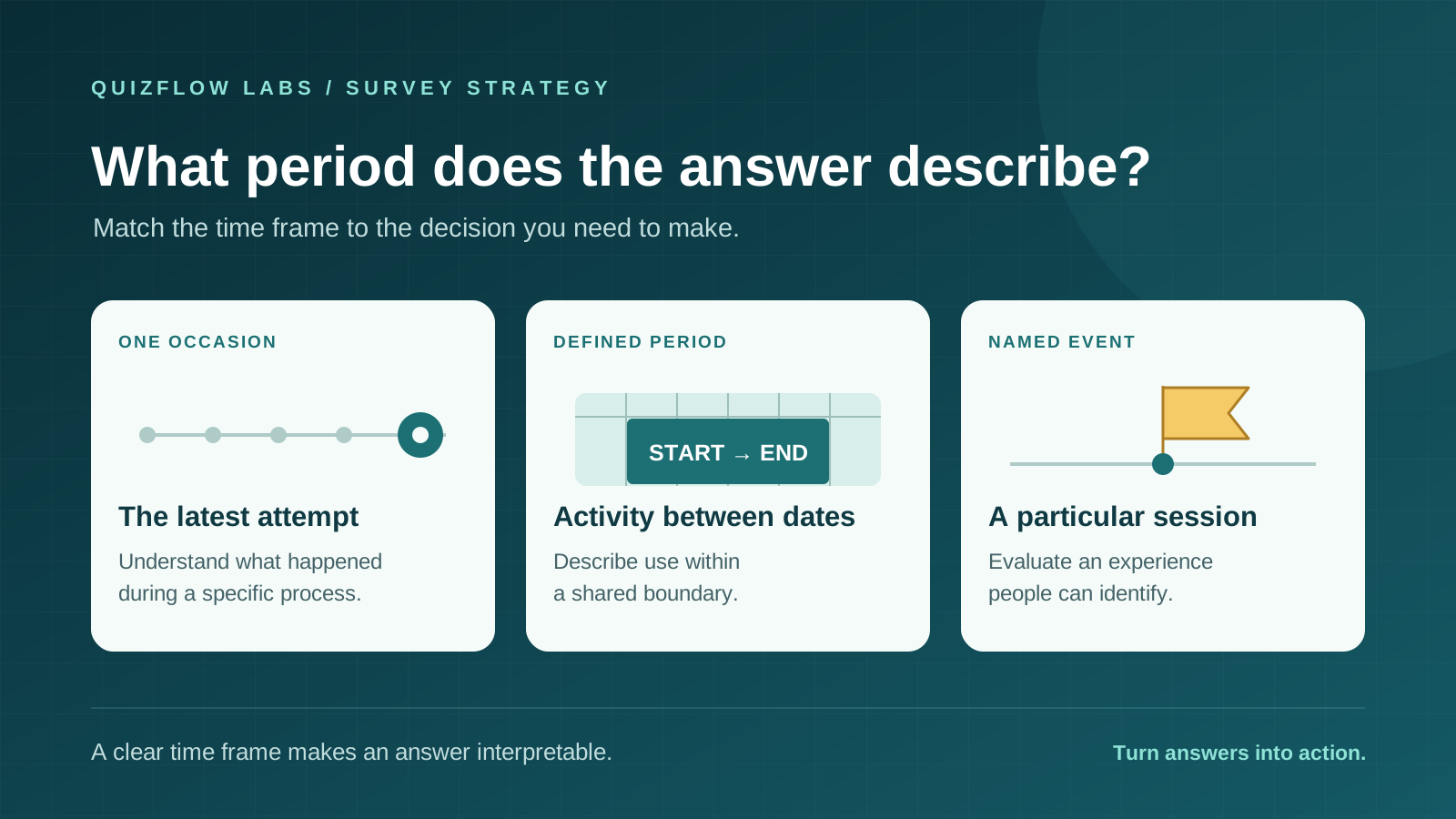
Choose what the answer should describe before writing the question: one occasion, activity within a defined period or a named event. Then make sure respondents have had the opportunity to experience it. The time frame determines what you can reasonably conclude.
Ask about one occasion when you need to understand a process
Use one specific occasion when the decision concerns how something worked. For example, “Thinking about the most recent time you tried to download a lesson worksheet, what happened?” invites an account of a process. “How often do you download worksheets?” measures frequency and cannot explain where the process broke down.
The most recent occasion gives respondents a selection rule. Asking them to choose a memorable occasion instead can produce a collection of unusually good or bad experiences. Neither approach establishes what happens every time. If you ask about the latest attempt, describe the findings as accounts of latest attempts.
Set a recency limit when older experiences would be irrelevant. If you are investigating a redesigned download page, ask about attempts made after that change. Someone whose last attempt used the previous page can still provide useful historical context, but their answer does not evaluate the new process.
Use a defined period when frequency matters
Use a defined period when you need to know whether an activity occurred or how often it happened. Define the activity as well as the period. Opening a template preview, downloading a file and using it in a project are different behaviors. Choose the one that informs your decision and explain what counts.
There is no universal seven-day or thirty-day standard. Frequent, ordinary activities can be difficult to count over a long period. An infrequent activity may barely appear in a short one. Statistics Canada’s survey methods guidance describes this balance: shortening a reference period can help recall, but making it too short can leave too few events to study.
Start with the natural opportunity to act. A weekly practice resource might warrant a recent period covering several scheduled practices. A resource used only during an annual renewal needs a different approach, such as asking about the last renewal. These are starting points to test, not prescribed windows. Extending a period just to collect more positive answers changes the question rather than fixing the evidence.
Make the boundaries visible where people answer
“Recently,” “regularly” and “last month” leave room for different interpretations. State the dates when everyone should report on the same period: “From 1 September through 30 September, on how many days did you use a lesson worksheet?” Keep that period in the question, rather than only in an invitation people may no longer have open.
A rolling period, such as the past fourteen complete days, serves a different purpose. It follows the respondent’s answer date. Two people answering a week apart are describing overlapping but different periods. Use it for a recent-experience check when that difference is acceptable; use named dates when you need everyone to describe the same calendar period.
A named event gives everyone the same occasion to evaluate. Ask about “the live editing session on 8 September” if that is what you want evaluated. The Government Analysis Function’s questionnaire guidance recommends explicit time boundaries and considering how respondents recall past events. Whichever frame you choose, ask a tester to explain what they included before assuming the wording is clear.
Separate no activity from no opportunity
Zero use is a description, not an explanation. A member may have needed no template, been unable to find one or chosen another method because the available template did not suit the task. Those cases imply different decisions: keep watching, improve discovery or investigate the resource itself.
Check whether the person had access for the period you are asking about. Someone who joined yesterday cannot report a full month of membership experience. You can restrict the survey to people with sufficient time, ask newcomers separately or acknowledge their shorter experience when reviewing answers. Do not silently compare them with established members.
Give uncertainty its own answer where appropriate. “I cannot remember” does not mean zero, and a skipped question does not establish non-use. If a count will not change your decision, asking whether the activity happened at all may be enough. Collect the detail needed for the decision, rather than demanding precision you will not use.
An example: deciding whether a template needs revision
Consider a hypothetical creator with a membership library of client-project templates. The creator wants to decide whether to revise the project-planning template. A broad question about how often members use the library would mix the value of many resources with the visibility and usefulness of this particular one.
The creator chooses a defined two-week period and invites members who had access throughout it. The first question is: “From 1 September through 14 September, did you use the project-planning template in a client project? Count using the template to plan work, rather than only opening its preview.” Answers are “Yes,” “No” and “I cannot remember.” This establishes reported use for a specific purpose; it does not yet explain usefulness. Members who cannot remember can finish without a use-specific follow-up; their answers stay separate from both yes and no.
For members who answer yes, a follow-up asks: “Thinking about the most recent client project in that period where you used the template, what, if anything, was difficult to adapt?” For members who answer no, a different follow-up asks: “What best explains why you did not use it during that period?” Relevant choices include no client project to plan, not knowing the template existed, being unable to find it, choosing another method and another reason.
Reports of difficulty adapting the template would identify material to investigate. Reports of not finding it would point toward library navigation. Having no relevant project would explain the lack of opportunity without evaluating the template’s quality. The creator can decide what to investigate next without pretending that every non-user rejected the resource. These answers still describe responding members and the specified period, not the whole membership’s needs.
Test how people remember, not just whether they finish
Before sending the survey widely, try it with a few people who resemble the intended respondents. Include someone with frequent activity, someone with none and someone near an important boundary, such as a recent joiner. This is a way to uncover misunderstandings; a small test does not prove the final survey will be accurate.
After they answer, ask which dates or occasion they were thinking about, what counted as use and how they arrived at the answer. The U.S. Census Bureau’s questionnaire-testing guidance describes probing respondents’ interpretation of reference periods. A completed form alone cannot show whether someone counted the experience you intended.
Listen for a repair you can make. If someone counts previews as use, clarify the activity. If they cannot separate several similar occasions, ask about one recent attempt or simplify the detail requested. If they check a calendar or project record naturally, consider allowing time for that check. Do not request copies of private client records simply to support an ordinary feedback question.
Build the question around a useful next step
In QuizFlow Labs, use a single-select Multiple Choice block for a defined set of answers, such as yes, no and cannot remember. Put the period and the activity in the prompt. A Text Response block can collect a short explanation in the respondent’s own words. These blocks let you keep a clear structured answer separate from the context behind it.
For a first version, one structured question and one optional explanation may be enough. If different answers need different follow-ups, map those paths before configuring branching and test each one in preview. Keep a useful ending: someone who could not find a resource needs a clear way to find it, while someone reporting a problem needs to know how to request help if that support is available.
Preview the actual wording on a phone. Confirm the dates, definition and full answer labels are visible and understandable. The platform provides the interaction; choosing a meaningful period and interpreting the answers remain part of the survey design.
Interpret changes only after checking the frame
Keep the question wording, answer choices and kind of period consistent when tracking a measure. Pew Research Center recommends preserving question wording and context for comparisons over time. Record deliberate changes so a redesigned question does not masquerade as a change in customer behavior.
Also check who answered and what opportunities they had. A launch week and a quiet week may contain different reasons to use a resource. A survey of recent joiners and a survey of long-standing members describe different experience. Report those differences alongside the findings before deciding that a resource improved or declined.
Make the group behind each conclusion explicit. Feedback on adapting a template comes from people who used it and answered that follow-up. Reasons for non-use come from a different group. Keep their counts and explanations separate. A survey can identify an obstacle worth investigating; it does not, by itself, show that changing the template will cause more members to use it.
Start with one decision and one answerable question
Write down the decision you want the survey to inform. Choose one occasion, a defined period or a named event that fits it. Define the activity, allow a truthful answer for non-use or uncertainty and test how people retrieve the information.
Then decide what each answer would lead you to investigate or offer next. If several answers would leave you equally unsure what to do, improve the question before adding more of them. A well-chosen time period makes feedback easier to interpret because it gives both the respondent and the business a shared experience to discuss.
Turn answers into action
Create a feedback flow with a clear purpose
Build a QuizFlow Labs decision flow that asks focused questions, collects useful context and guides people toward a relevant next step.
Start building